What is Psychodynamic Therapy?
Psychodynamic therapy aims to bring the unconscious into conscious awareness.
The approach was developed by Sigmund Freud — one of the most influential minds of the 20th century, who like all of us, was complicated and full of contradictions. He believed that by talking and exploring unconscious meaning, we could relieve ourselves of symptoms: like unblocking a drain. Once we can connect with the feelings underneath e.g. anger, shame, fear, anxiety, grief or guilt — the symptoms that brought us to therapy begin to shift.
Many of us move through the day on autopilot. We wake up, reach for our phones, and feel like life is just happening to us. In psychodynamic therapy, we work together to turn that unconscious routine into a series of active choices — supporting your freedom and agency.
We also look at how your early relationships have shaped the way you see the world and relate to others — to people, institutions, even spaces. These patterns show up as judgements, beliefs, or what we call defences: ways of coping that once kept you safe, but may have reached their expiry date.
I like to imagine a circular room full of doors. Right now, you might only be able to see two of them. Together, we find the others and start unlocking them.
What actually happens in a session?
Sessions are relatively unstructured — there's no worksheet to fill in or agenda to follow. You might begin simply by saying what's on your mind that day. That can feel unfamiliar at first, even uncomfortable, but that space is deliberate. What you bring, and what you find difficult to bring, is often where the most meaningful work happens.
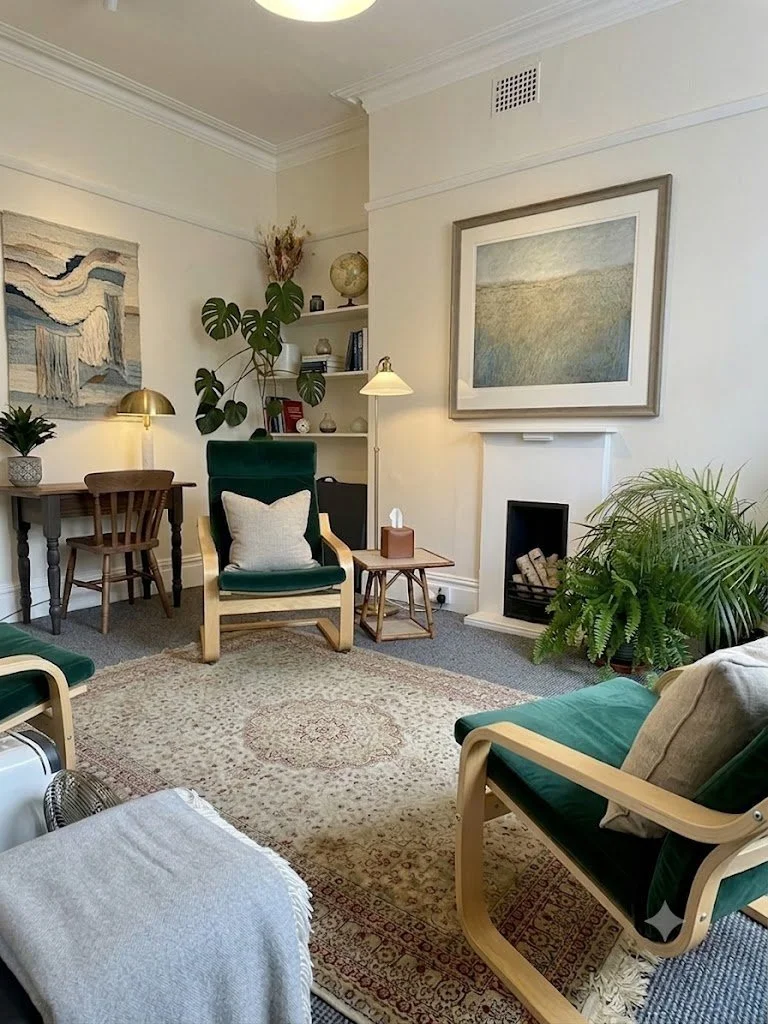
A central part of this work is the relationship between client and therapist. The therapy room becomes a kind of playground — a space for curiosity and exploration — where old relational patterns can surface and be looked at live, between the two of us. When I notice something, or sense there's something difficult to put into words, I'll offer an interpretation: a way of naming what's emerging so we can think about it together.
I often describe our work as getting everything out onto the floor — a bit messily, a bit sprawlingly — and looking at the different parts together. Turning over things that haven't been examined in a while, safely, at your own pace.
Another thing that makes psychodynamic therapy distinct from other approaches is dream analysis. Dreams are considered a rich source of unconscious material, and I actively encourage clients to bring them into the room.
Feeling curious?
If any of this resonates, I offer a free 30-minute consultation — a chance to ask questions, get a feel for how I work, and see whether we might be a good fit. No commitment, no pressure. Just a conversation.
More questions ? You can take a look at my FAQs page and/or you can bring them to our initial consultation.